F1 Tech | Inside the technical solutions shaping the new Haas VF-26

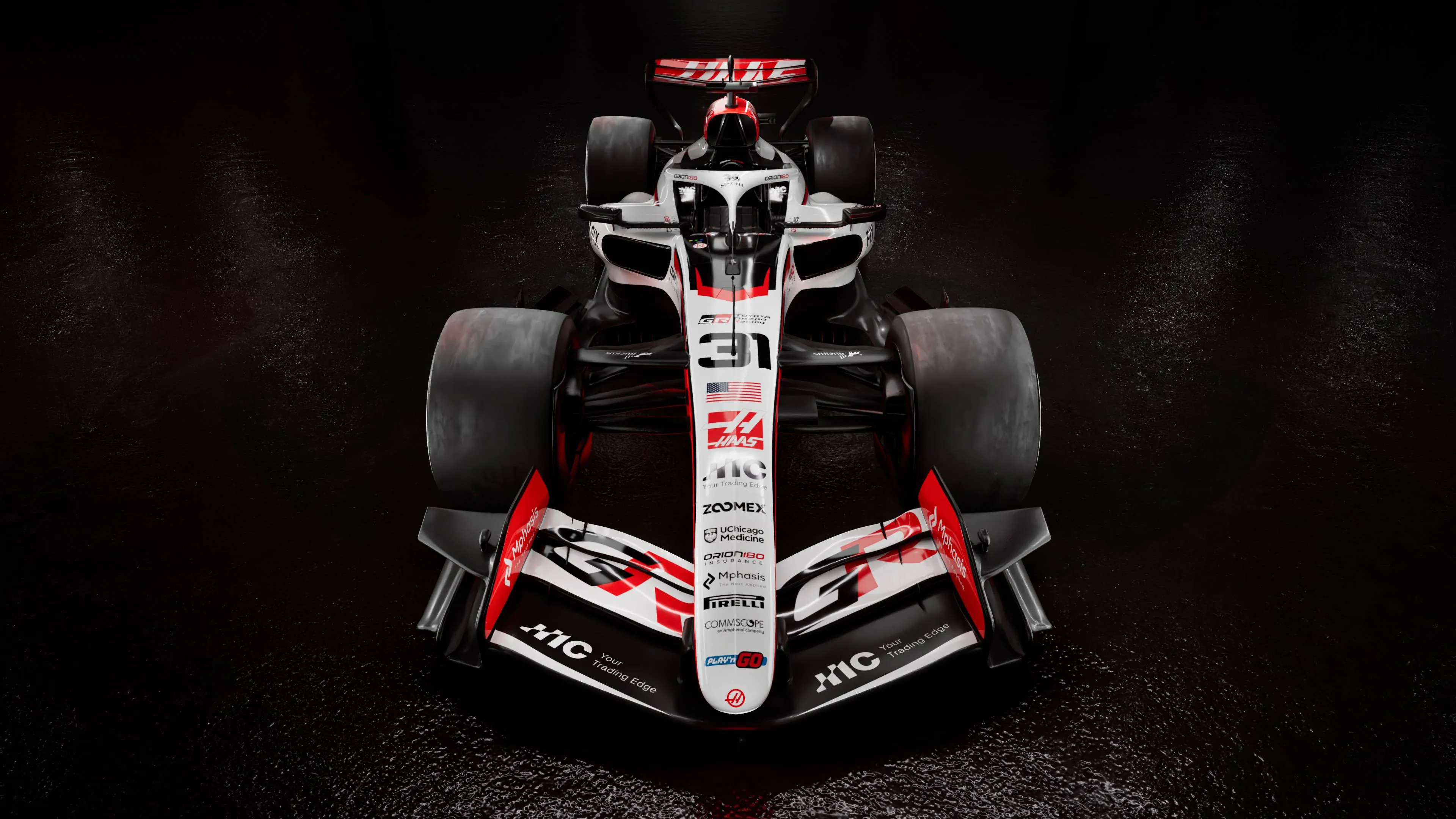
Haas has just launched the new VF-26, which introduces some intriguing design features, similar to those seen on the RB22 and VCARB03.
With just a week before the Barcelona shakedown, Haas unveiled their new car, which sowed some interesting design choices, despite showing less extreme solutions than those seen on the RB22 for example.
The car is probably a “base” version, which will be substantially updated during the year, as the main focus is now on the engine, as emphasised by the Technical Director, Andrea de Zordo.
Despite this, the VF-26 is designed to compete with Racing Bulls and Williams for 6th place in the Constructors' Championship. Let’s take a closer look at the details of this brand new car.
Interesting solutions on the front wing
Starting to analyse the frontal view, some differences to the RB22 and to the VCARB03 immediately emerge: concerning the front wing, it shows a very simplistic design of the mainplane and flaps, which will probably show a more accurate and elaborate design when the real car debuts in Barcelona.
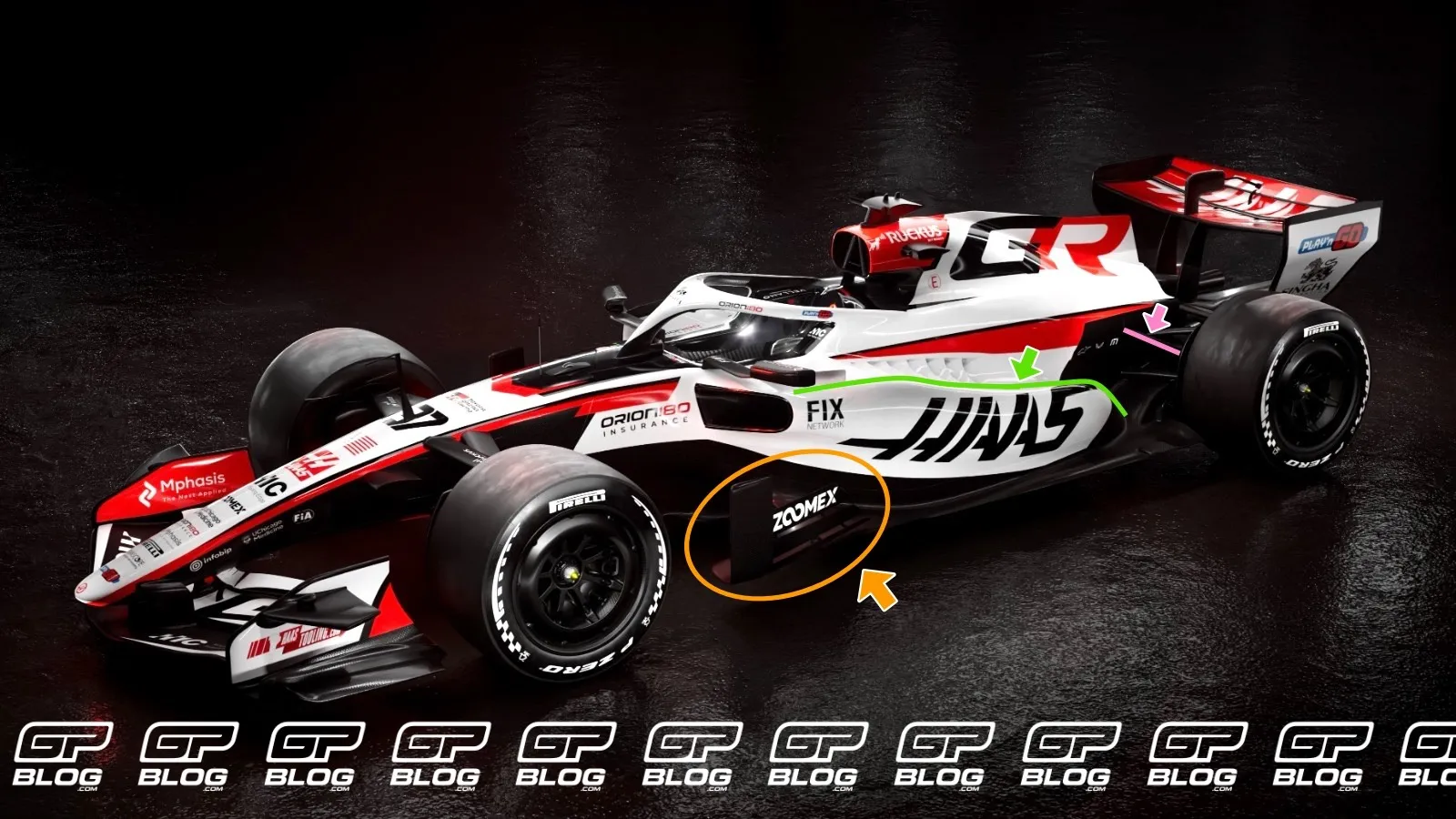
As shown by the orange arrow and circle, the endplate of the front wing has been divided into two elements to maximise the outwash effect: there is a lower tray bent at one end to which a long horizontal knife is connected. The goal is to generate a series of vortices that can push air outward from the front wheel, significantly reducing drag.
As for the nose, it has a tapered shape but is much more elongated than the version seen on the RB22. As pointed by the light blue arrow, in fact, it extends beyond the main plane, with the supports connected to the second flap. The goal is to use the two supports as vertical flow diverters, pushing air towards the floor inlet.

From this view, two other elements can be appreciated: the front suspension and the cooling inlet. The front suspension shows a push-rod scheme, as highlighted by the pink line and arrow.
This choice is shared with Red Bull, Racing Bulls, and Audi and is related to the different nature of these new cars compared to the ground-effect cars from last year: thanks to the flat floor, these cars don’t need to be run so stiffly and close to the ground as they were last year.
As a consequence, the goal isn’t to keep the floor and aerodynamic platform as stiff as possible, but to have an easier car to drive with a wider operating window. As a consequence, most teams will probably shift to a more conventional push-rod front suspension, which worked perfectly well during the flat-floor generation of cars seen until the end of 2021.
This perspective allows us to appreciate the oval-shaped inlet, with a shape very similar to the cooling inlets adopted at the beginning of 2022. This design aims to generate a high-pressure zone around the cooling inlet, to maximise the air drawn in by the engine and push the front wake outwards, reducing the turbulence that is sucked under the floor.
Long nose and sculpted sidepods
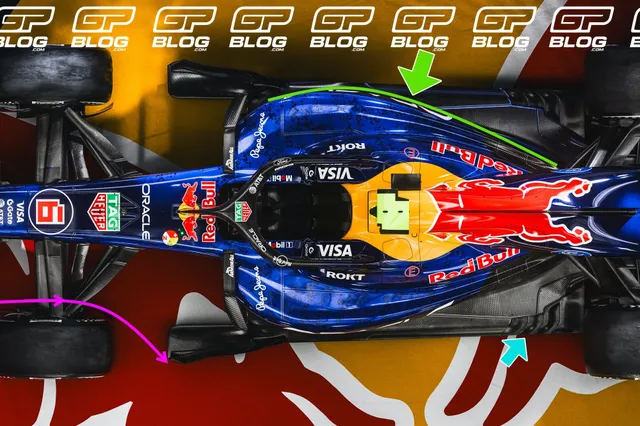
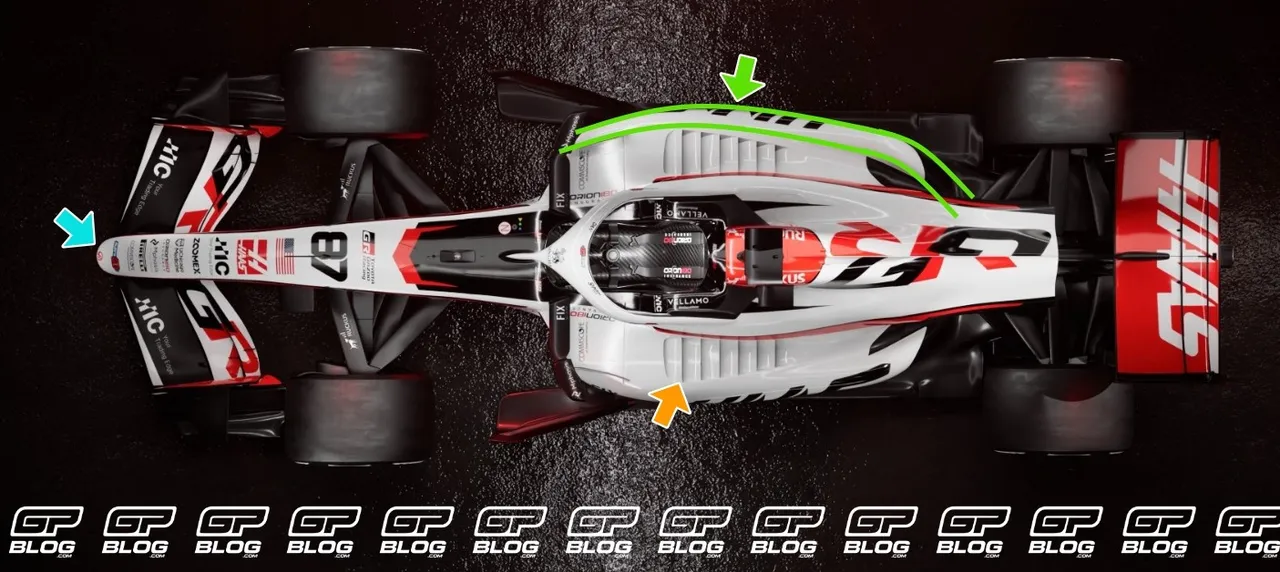
Moving now on to analyse the view from above, two other details can be appreciated: as highlighted by the light blue arrow, the nose is thin and long, as it extends well beyond the mainplane.
The lines and the green arrow, instead, highlight the shape of the sidepods, which presents a very similar trend to that seen on the VCARB03: in the central portion there is a channel that aims to push the air towards the diffuser, which is delimited by a rather thick "edge" with a wavy shape, aimed at directing most of the air towards the rear area of the floor.
The orange arrow, instead, highlights the vents on the upper surface of the sidepods, which serve to dissipate most of the heat, underlining that the Ferrari Power Unit concentrates most of the radiant masses on the sides of the car.
The lateral view shows a very interesting detail in the area just in front of the cooling inlet: as shown by the orange circle and arrow, the lateral fence, designed to push the front tire wake inwards, has been divided into three equally sized horizontal sections, placed just behind by a long vertical element that serves as a flow diverter.
Similarly to what was appreciated on the RB22, the slits between the three horizontal elements allow turbulent flow to escape and be diverted outwards, preventing it from being sucked under the sidepods.
The green arrow, instead, shows the trend of the upper part of the sidepods described previously, and from this view it’s possible to appreciate that it's much steeper than the "sloping" version adopted at the end of the ground effect era in 2025.
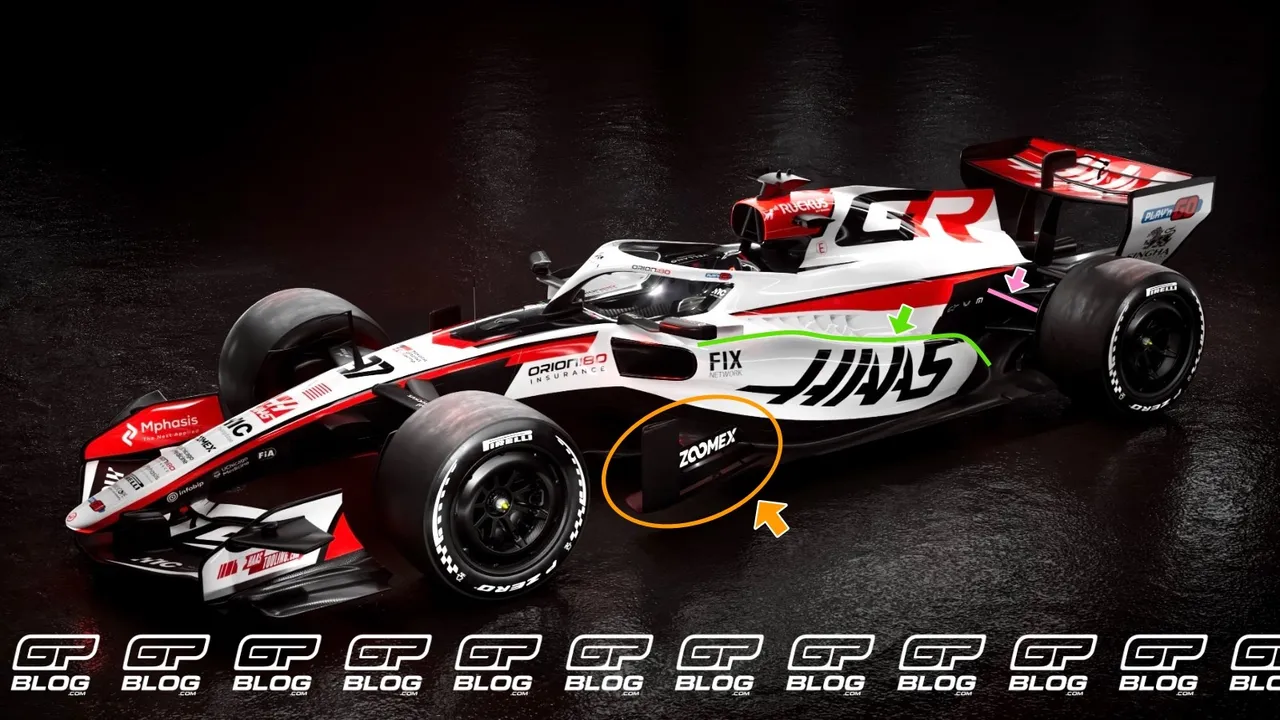
Lastly, the pink line and arrow point at the rear suspension scheme: from the images it’s clear that Haas has adopted a push-rod rear suspension scheme, in line with also done by Red Bull and Red Bull Racing.
This choice is probably related to the fact that teams will try to keep rear-end of the car as high as possible in this new generation of cars, to extract the maximum amount of air from the diffuser, generating downforce as a consequence.
This car is the result of a lot of hard work from all the guys in the team and will be interesting to see how it’ll behave in Barcelona, a challenging circuit not only for the chassis and the aerodynamics but also for the engine.
Another interesting aspect for this year will be the development path, as both the engine and the aerodynamics will be at the centre of attention and updates from all the teams. In this regard, De Zordo expressed as follows: “For sure, the new regulations will change the balance between aero and energy management. Initially with the PU, as it’s all so new, there is - not necessarily more to gain, but a lot more to lose if you don’t do well. To understand how it works and how to maximize that will probably be the most important part.
“After a certain time, when drivers, teams and also power unit suppliers learn more about this new way of racing, then gradually the performance on the energy side will converge between competitors. The main differentiator will then go back to being on the aero side, but I think initially, managing that energy side will be critical this year.”
In conclusion, the new VF-26 some solutions in line with those seen on the RB22 and on the VCARB03, but it’ll be interesting to see how the car behaves not only from the aerodynamic point of view, but also on the reliability on the engine, as that could have a huge impact on performance during the first few weekends.
Read also







Popular on GPBlog
'As for Ferrari, disaster already seems to be looming again'

Verstappen breaks silence over alleged engine compression ratio trick
Ford highlights Verstappen’s role in Red Bull power unit development