F1 Tech | Inside Red Bull's strategy masterclass to defeat McLaren

The strategic masterclass played by Red Bull’s strategist Hannah Schmitz allowed Max Verstappen to gain precious points on Lando Norris.
The Qatar Grand Prix was a fascinating and unexpected race, where strategy played a crucial role, ultimately allowing Verstappen to beat Piastri and Norris.
The strategy choice, together with Verstappen’s phenomenal drive, put McLaren under pressure, forcing the team to adopt an equal strategy between their drivers to prevent any favouritism.
The reasons for the Dutchman’s victory are also related to the great set-up found by the team after struggling on Friday and in the Sprint.
Let’s try to analyse every aspect behind Red Bull’s masterclass.
Verstappen struggled on Friday and during the Sprint
Red Bull Racing’s weekend didn’t start as expected, as Verstappen immediately complained of understeering and of an unstable car at high speeds during FP1, proof that the optimal set-up was yet to be found. Verstappen, in fact, was asking for a car that had more front end in the medium speed corners and that could jump less on kerbs, where he was experiencing a lot of vibrations, especially on the soft tyres during his qualifying simulations in the single practice session.
For this reason, the team opted for some major set-up changes before the Sprint qualifying on Friday afternoon, but they didn’t seem to produce positive results. In SQ1 and SQ2 on the medium tyre, the scenario seemed a lot better, with the RB21 jumping less and suffering from less vibration, allowing Verstappen to fight against the two McLarens in the first two rounds of qualifying.
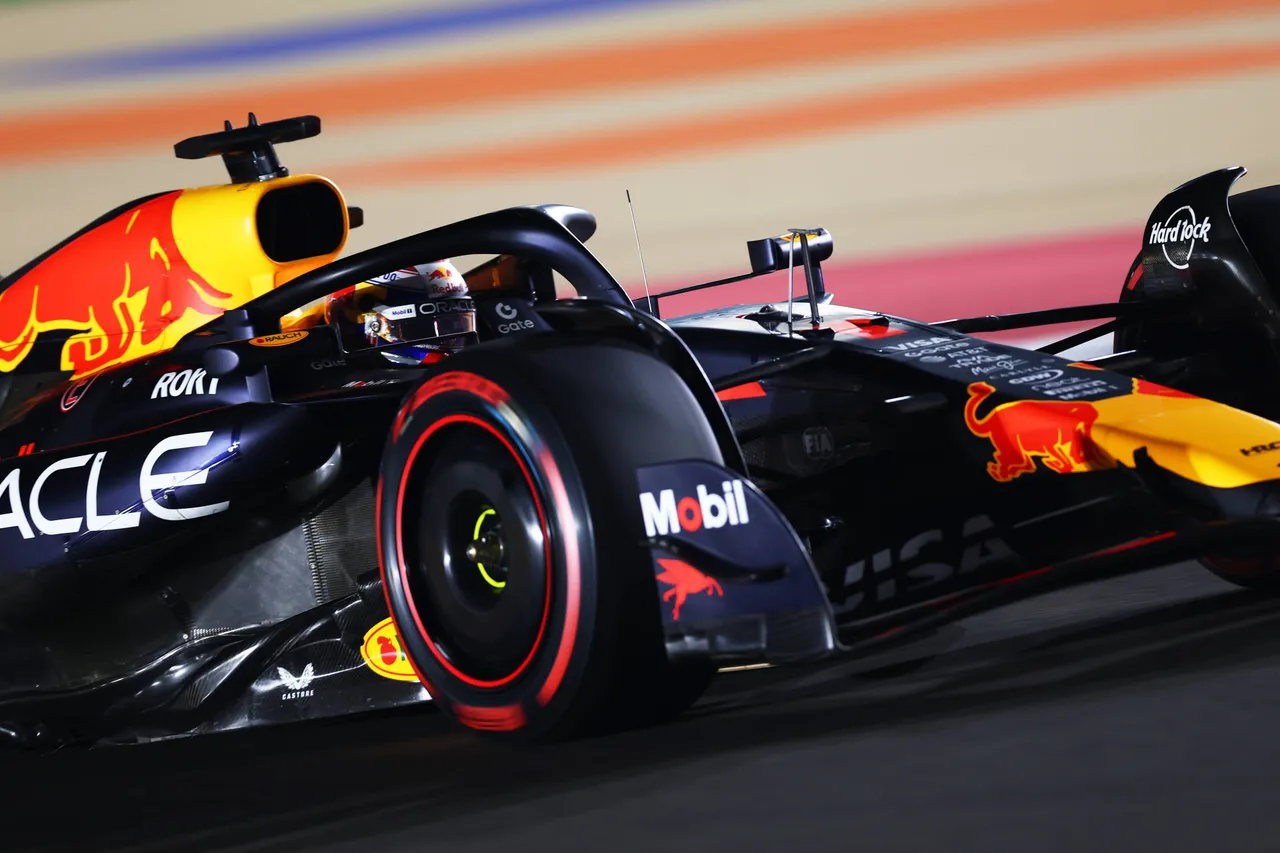
However, as soon as soft tyres were fitted on his RB21 for SQ3, the understeering and the bouncing presented once more, with the Dutchman, who also went off during his first lap on the softs and was able to qualify only in P6, even behind his teammate Tsunoda.
Talking to F1TV after the session, he commented on his performance as follows: “Not good from the first lap. Just really bad bouncing and very aggressive understeer that would shift into oversteer at high-speed. We changed a few things, but it wasn't working well, so it's something we need to understand.”
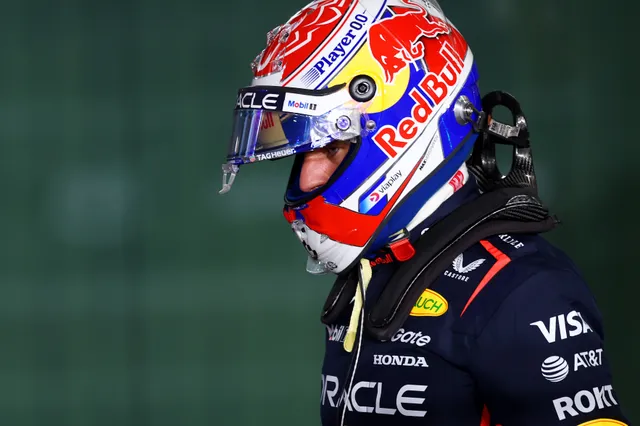
Due to the Parc Fermè rules, the team couldn’t touch the car until the end of the Sprint, which saw Verstappen finishing in a good P4, losing just a couple of points to the two McLarens. His RB21 showed a very strong pace during the first few laps of the race, which allowed him to get into Norris’ DRS, but as soon as tyres started degrading, he lost a lot of ground to the drivers in front, finishing the ‘short race’ just 2.8 seconds behind Norris.
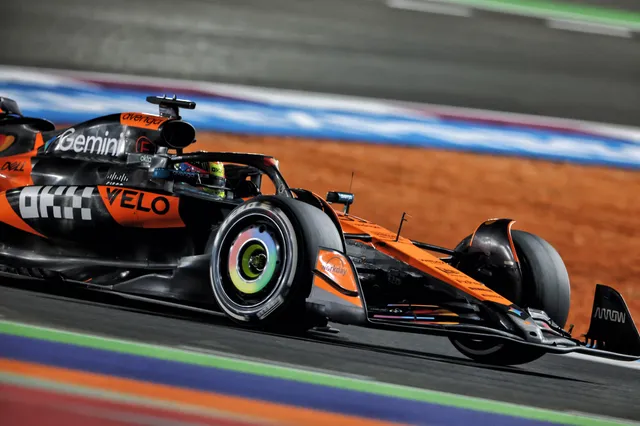
Big changes to set-up before qualifying
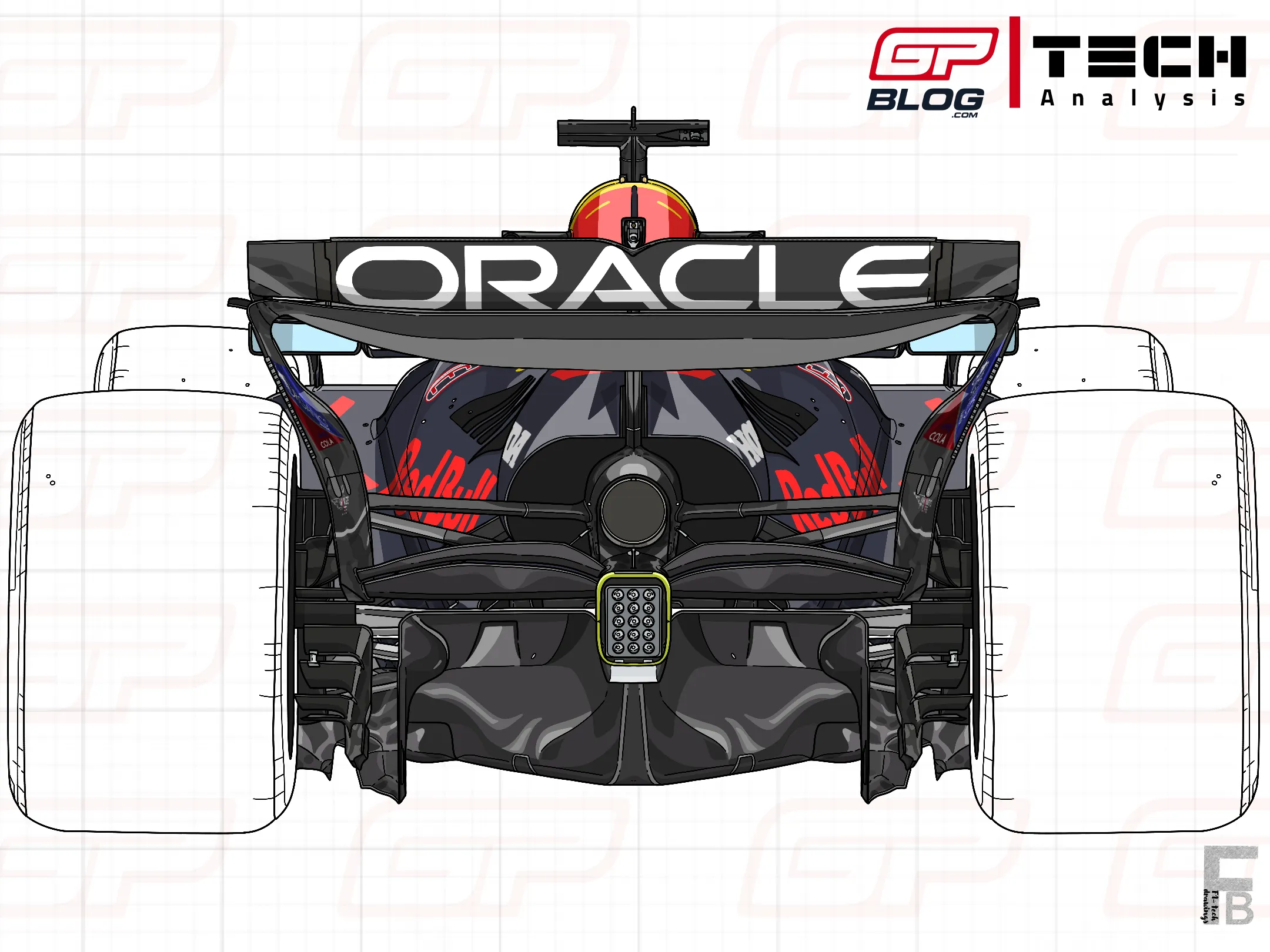
After the short race, the team acted on the car to try and mitigate those bouncing issues seen on Friday and during the Sprint, to allow Verstappen to feel better inside the car and fight for pole position. They kept using the same aerodynamic configuration used on Friday: as shown in the drawing below, in fact, they adopted the medium-high downforce rear wing, characterised by a spoon mainplane with a very pronounced chord to generate as much downforce as possible, matched with a double-element beam wing, which showed two skinny profiles to reduce drag and favour the straight-line speed.
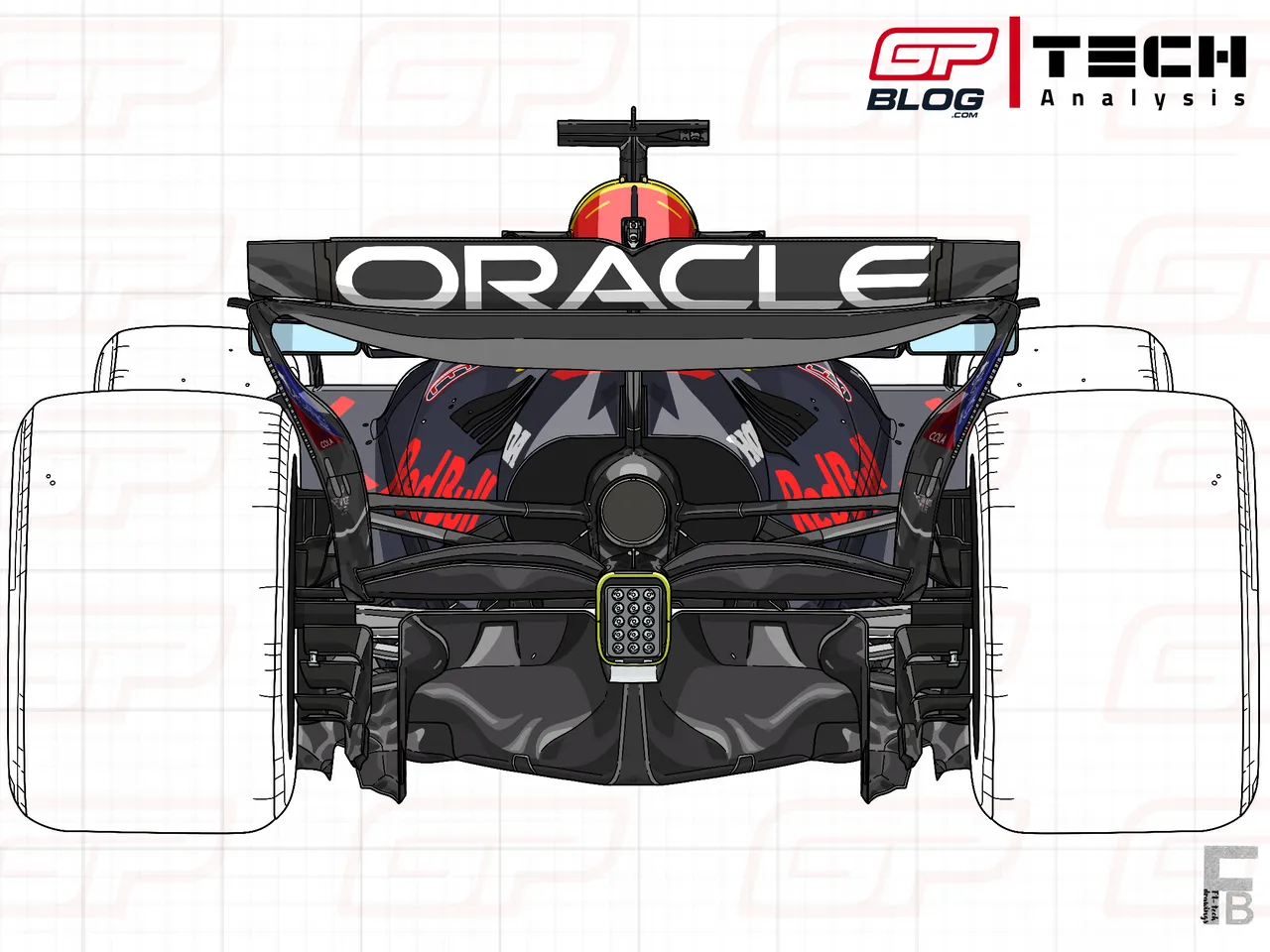
The changes made by the team, instead, mainly concerned the mechanical set-up, to reduce the tedious bouncing experienced through the medium and high speed corners, by also adopting a more conservative ride height compared to the one adopted on Friday.
The changes had a good impact on performance during qualifying, even if Verstappen kept complaining of a car that had a bit too much understeering in some specific sections.
Despite the struggles, the Dutchman managed to get a phenomenal P3 in qualifying, proof that the balance was drastically improved, also thanks to the work done at the factory, even if the gap evidenced that Red Bull was still behind McLaren in terms of pure pace.
When interviewed after qualifying, he pointed out that: “I think this qualifying was a little bit better, even though there are still some limitations that don’t allow us to push harder around the lap,” referring to the understeering issues faced with the soft tyre.
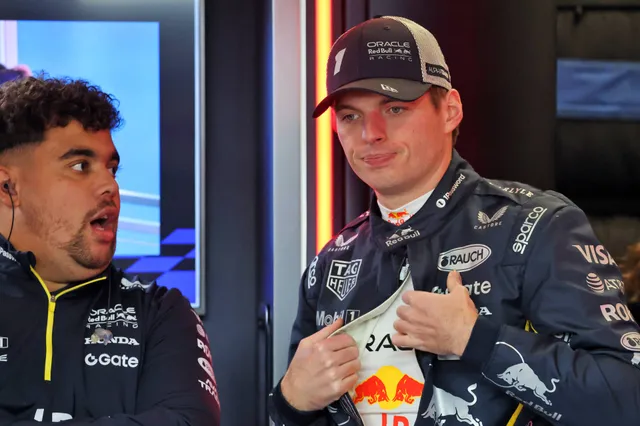
After staying behind McLaren for the whole weekend and with not enough potential in his car to attack the Papaya cars, Verstappen was conscious that only two elements would have played in his favour in Sunday’s Qatar Grand Prix to keep the Championship battle alive: the start and the strategy.
At the start, he managed to pass Norris, taking the first big opportunity of the weekend. The second big opportunity came at lap 7: with Galsy and Hulkenberg colliding at the exit of turn 1, the Safety Car was deployed, forcing strategists to make decisions in the span of a few seconds. The obligation to do two pit stops and a maximum of 25 laps on each set of tyres offered Verstappen the best opportunity to try and pass Oscar Piastri in front of him.
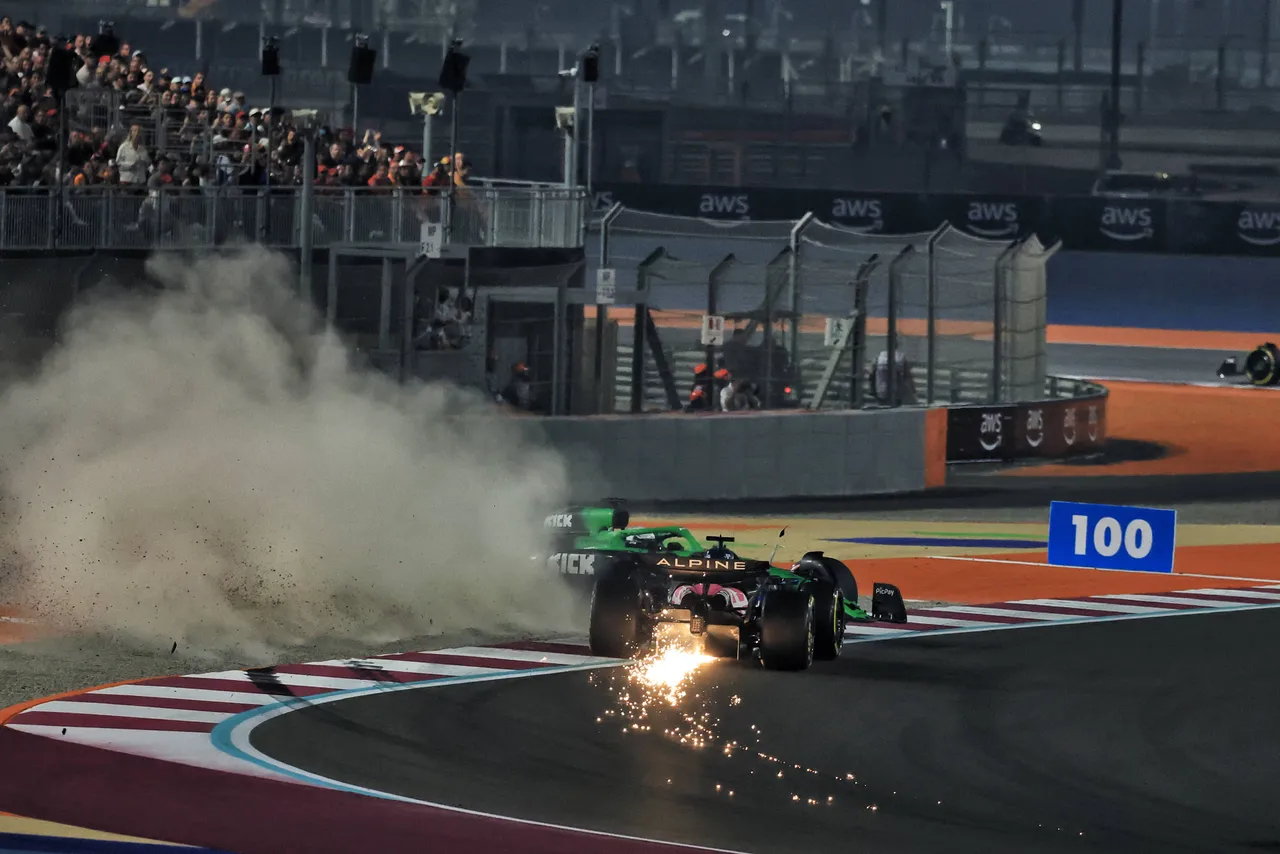
As explained by Principal Strategy Engineer Hannah Schmitz, the team had already thought about pitting under Safety Car conditions, as this saves precious time compared to the rivals: “Pre-race, that was exactly when our safety car and virtual safety car windows opened, and that was the plan. So we would pit both cars if the safety car came out on lap 7.”
“There's such an advantage to pitting under a safety car when you've got to do the two stops that to us that was a clear thing we should do, and I guess a lot of the pit lane felt the same,” she pointed out when interviewed by ViaPlay after the race.
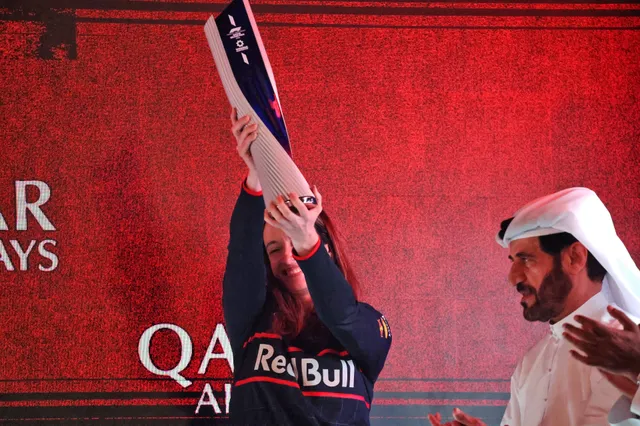
This key strategic decision, matched with McLaren’s choice to stay out with both drivers, served the race victory to Verstappen on a silver platter. Once the two McLarens stopped on lap 25, he had free air in front of him and could push hard during his last few laps of the second stint.
The great advantage for him came once he put the hard tyres on lap 32: despite having hard tyres that were only 7 laps fresher than those of the two McLarens, he was only 3.6 seconds behind Norris, and he managed to gain time on him in the following few laps, getting into the Briton’s DRS before he stopped on lap 44.
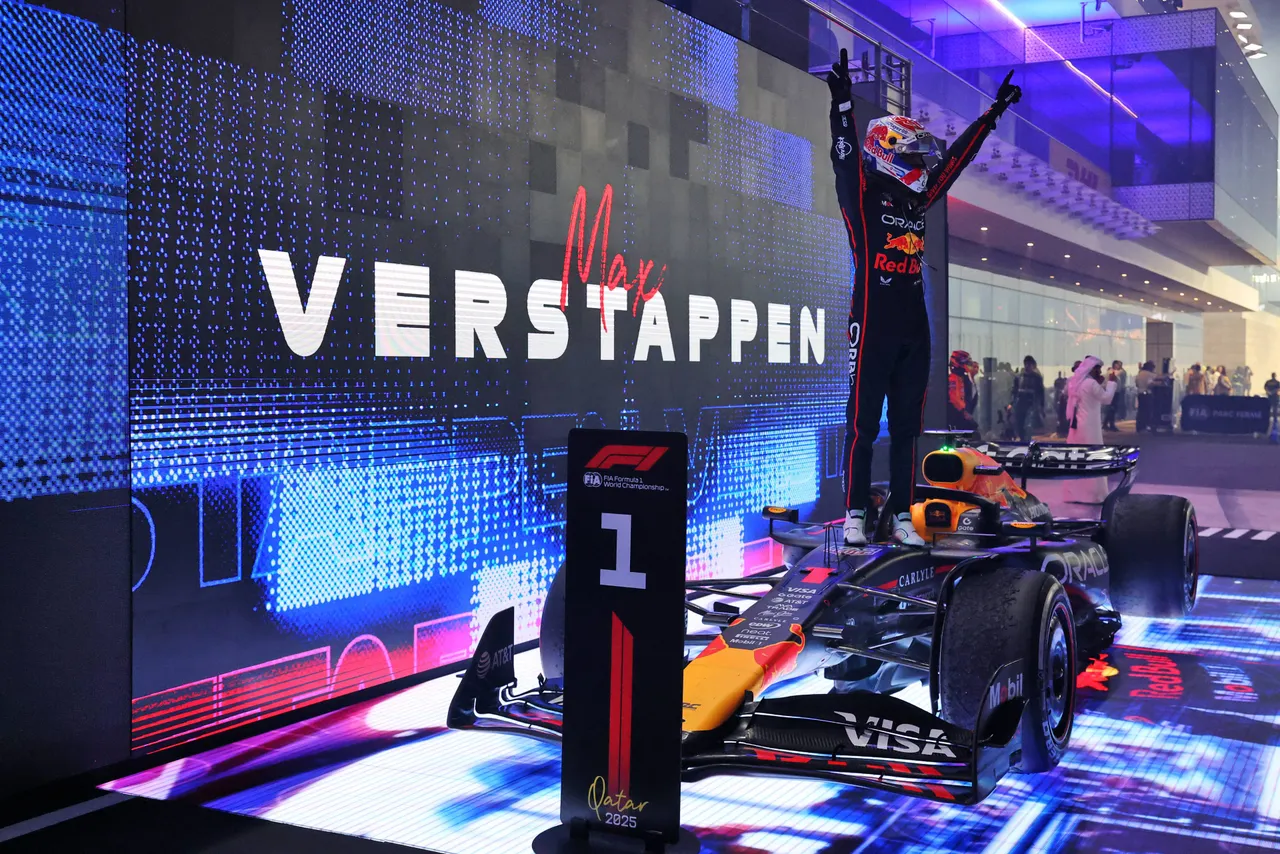
From that moment on, he gained the lead of the race, with 14 laps to go and 15 seconds of advantage over Piastri in P2. The great time advantage, together with a very good pace, allowed Verstappen to keep the first place with no particular problems, eventually getting his 7th victory of the year, equalling Norris and Piastri’s wins.
This performance allowed him to gain precious points on Norris in the Championship standings, bringing the title battle to the last race in Abu Dhabi. For Red Bull, it’ll be fundamental to arrive at the last race with a good base set-up, to then work on that and try to build a strong weekend, allowing Verstappen to fight on equal terms against the two Papaya drivers.
Read also

GPblog's latest F1 Paddock Update
Want to stay up-to-date with what happens in the F1 paddock? Then GPblog's F1 Paddock Update video is the perfect way to do it. Subscribe to GPblog's YouTube channel and turn on notifications to never miss the latest episodes.


Popular on GPBlog
Red Bull's in-house power unit passes key milestone at Imola
Audi reveals first-ever Formula 1 car livery ahead of debut 2026 season!
Aston Martin and Honda respond to Mercedes and Red Bull power unit ‘trick’ debate